Archive for October, 2011

Amelia Gambetti and Lella Gandini

Wednesday, October 26th, 2011

Educators from Reggio Emilia Italy - Amelia Gambetti and Lella Gandini

Remember when I shared the news that Amelia Gambetti and Lella Gandini* were going to be presenting at The Carle on October 21st? Well, crazily enough, that time has come and gone, but the videos from Reggio Emilia they shared and the discussion they provoked will stick with me and the evening’s attending educators, administrators, and parents for some time to come.

The evening started for some with a tour of The Smith College Center for Early Childhood Education.

Back at The Carle attendees enjoyed a delicious dinner from The Black Sheep, . . .

Event participants in the Art Studio

. . . browsing the Museum, and connecting with colleagues and the presenters.

Amelia Gambetti

The videos Amelia and Lella shared come from the traveling exhibition The Wonder of Learning – The Hundred Languages of Children.  In addition to getting to view the videos in their entirety, the presenters played back specific clips a few times so that attendees had multiple opportunities to process what they were seeing.

Being behind the scenes for many great lectures and presentations at the museum  means that sometimes I have to miss part of the presentation. This time, I missed the reflections shared with the entire assembly after the brief small group discussions. If you were there, please share your reflections or lasting impressions from the evening through this post’s comments. I want to get filled in and keep the conversation going until the next time The Carle has the honor of hosting distinguished educators from Italy.

*Amelia Gambetti is currently the International Network Coordinator for Reggio Children and the US Liaison for Consultancy to Schools. Lella Gandini is currently the Reggio Children United States Liaison for the Dissemination of the Reggio Emilia Approach. If you’re new to the Reggio Emilia Approach to early childhood education, our shop has many great resources. Also,  NAREA and Education.com are good places to start learning more.

Dots That Walk, Lines That Talk

Monday, October 24th, 2011

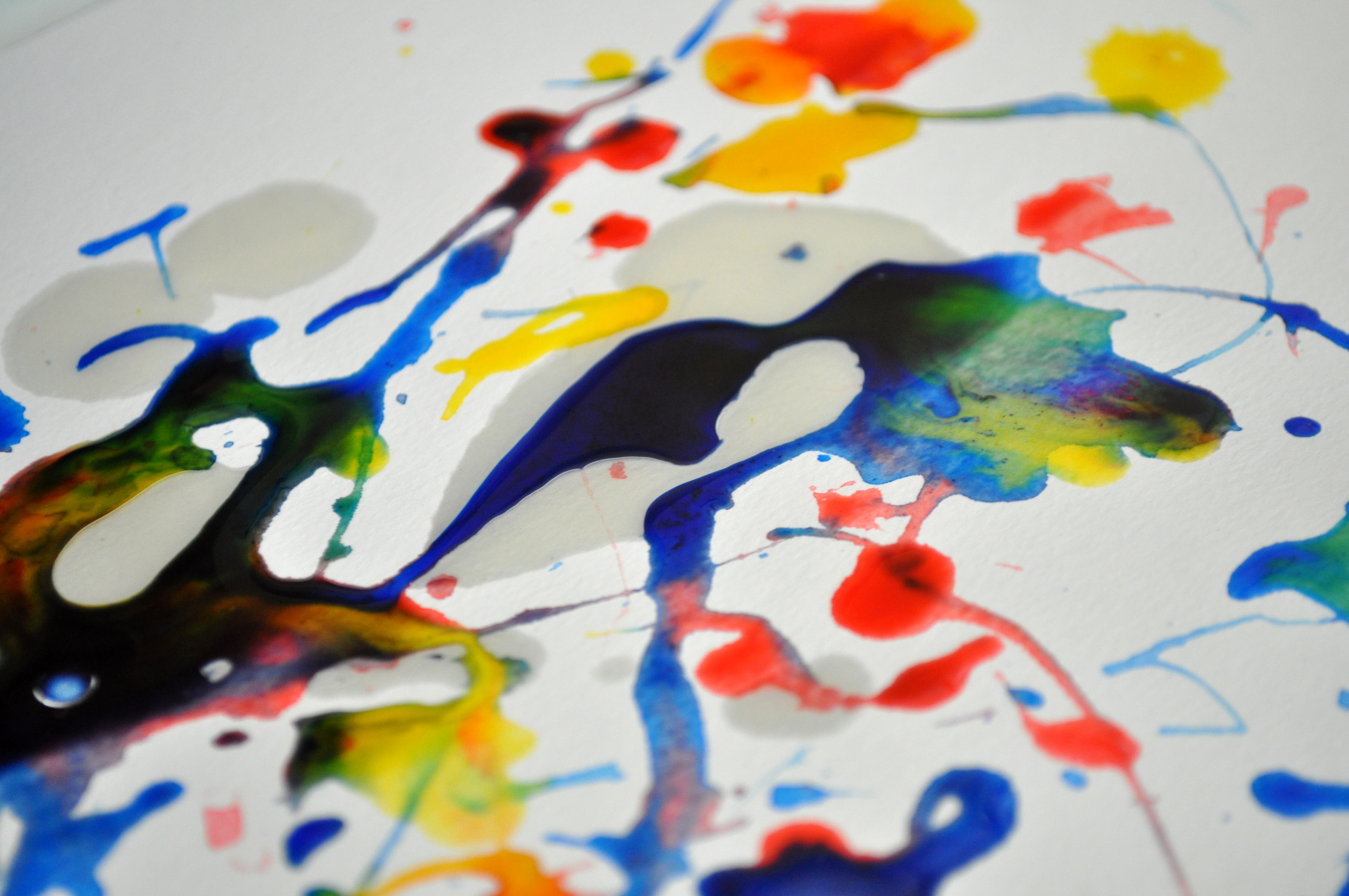
We started preparing for the new Public Art Project that starts this week.  Stop by to try out the new set of washy materials!

Dots that Walk, Lines that Talk
October 27 – December 6, 2011
Free with Museum admission
Drawing inspiration from Paul Klee’s quote, “A line is a dot that went for a walk,” and Jules Feiffer’s lines that twist, tumble and turn, have fun creating your own visual journey with marking tools and wash.

Bridging Art and Nature Workshop

Monday, October 17th, 2011

Yesterday, eleven educators joined me at The Museum for the professional development workshop Bridging Art and Nature for Teachers and Parents.  The day began on The Museum grounds collecting natural materials and creating independent assemblages in various spots in the orchard.  It was a perfect autumn day for exploring and collecting and everyone was inspired by the leaves, berries, rocks, twigs and flowers in different ways.

Another highlight from the day was our conversation around Imaginary Garden, the 600-pound bronze sculpture by picture book great Leo Lionni.  Participants shared what they felt the sculpture represented and we discussed what may have inspired what is “growing” in Leonni’s Garden.  Roosters? Mops? Cacti?  Weapons? (For more information and photos of Imaginary Garden at the recent sculpture unveiling check out this Amherst Bulletin Article.)

We wrapped up the day in the Studio discussing and exploring materials.

For more information about upcoming Professional Development opportunities at The Carle, click here.

What are some ways you use nature as inspiration with your students or children?


Open-Ended Play/Creation

Thursday, October 13th, 2011

I  found Scrapstore’s video about their Playpods through a fellow museum educator.

Lets talk about it! Share your reactions and comments.

How could you translate an experience like this to other materials (i.e. markers, paper, crayons, paint, glue, buttons, bubble wrap, etc…)?


Mo Willems’ The Red Elephant

Saturday, October 8th, 2011

The Red Elephant by Mo Willems

Last Saturday, a very large, very red sculpture was installed in the Museum’s terrace. The Red Elephant, on long term loan by its artist Mo Willems (maybe you’ve heard of him?), is made of steel and weighs around 1500 lbs. (photo by Kristin Angel)

Installation of the Red Elephant at The Eric Carle Museum of Picture Book Art

I won’t go into detail about her conception and construction – that story is told very well in pictures on Mo’s Blog.  What I wanted to highlight is that it couldn’t have happened without the collaborative effort of metal sculptor Sam Ostroff, whose design sense is outstanding in its own right.  Though Mo has been playing around with welding and metalwork himself, this sculpture was designed knowing Sam and his team would be the fabricators.  Mo said in a post-installation presentation about The Red Elephant‘s journey to completion:  “You never want to be the smartest guy in the room. You have to know when to get out of the way.”  I love it when artists share with kids just how collaborative and social the art making process can (must?) be.  Mo shared how his work in fine art, animation, theater, and picture books are made stronger when he allows others’  ideas and skills to take his ideas farther than he could on his own.

The Red Elephant at The Eric Carle Museum of Picture Book Art

Speaking of collaboration.  It was quite the collaborative effort to get the steel pachyderm in place after all the rain made the tow truck stick in the mud.  (photo by Kristin Angel)

In the Art Studio at The Carle

And while we’re discussing the collaborative spirit that was celebrated last Saturday, let me share some images of the paper maquettes and cardboard sculptures we invited visitors to create for the occasion.  Mom and son discussed ways to make this orange piece stand (above).

The Eric Carle Museum Art Studio

Collaborative effort in getting Elephant- inspired cardboard sculptures collage-ified.

the Art Studio at The Carle Museum

This family worked together to turn the one below into dragon. It ended up having 4 mustaches.  What I’m now dying to know is how it breathes fire without burning all the mustaches? Family, if you’re reading this, please let me know!

Public Art Program- Making Sculptures and Maquettes


Intergenerational Collage Activity

Tuesday, October 4th, 2011

Dear Art Studio,

For almost fifteen years, my teachers and I have been inspired by Eric Carle artwork and stories.  We have read, acted out, and dreamed as characters in every story.  We have also created our own Eric Carle inspired art projects.  In fact, several years ago in a training, our teachers created their very own “Carle-esque” storybook.  This project not only celebrated their teaching talents, but the storybook became a fundraising resource in our school’s expansion.

Our school now has the opportunity to share the world of Eric Carle with the senior center with whom we have developed an intergenerational program.  During February of this year, we hope to pair young preschoolers with senior citizens to collaborate on art pieces and a storybook demonstrating the various meanings of love.

I look forward to hearing your thoughts and ideas.

Sincerely,  Lisa D.

Thanks so much for writing to The Eric Carle Museum about your intergenerational project plans.  Eric Carle’s books are a wonderful starting point for a collaborative art project between young children and adults.

To help get your Eric Carle inspired project underway I have a few suggestions that we’ve adapted here at The Carle in our Art Studio when making tissue paper collages.  I’m not sure how many children and adults will be involved in your project, but our Tissue Paper Collage activity page will provide you with step by step instructions and suggestions for getting started.  Check out our recent post about Watercolor Wash Collage Papers.  We’ve also created a recipe to make liquid starch glue used to attach the tissue papers to the background paper available in a printable PDF on our website’s Activities page.    Or you can buy liquid laundry starch in your grocery store’s laundry aisle.

Perhaps one way the adults could contribute to the collaboration is having them prepare the tissue papers for the activity.  They could cut a variety of colored and patterned tissue papers into geometric and organic shapes and put them into baskets for the children to collage with.

Another great way to have the children and adults interact is having them read Eric Carle books together before the art activity and discuss Eric’s illustration process.

When your storybook is complete, we would love to see it!   Email your students’ Eric Carle inspired art to artstudio@carlemuseum.org and we may post it on the blog.  Don’t forget to document the project with photographs and notes; we’d love to see all the work along the way!