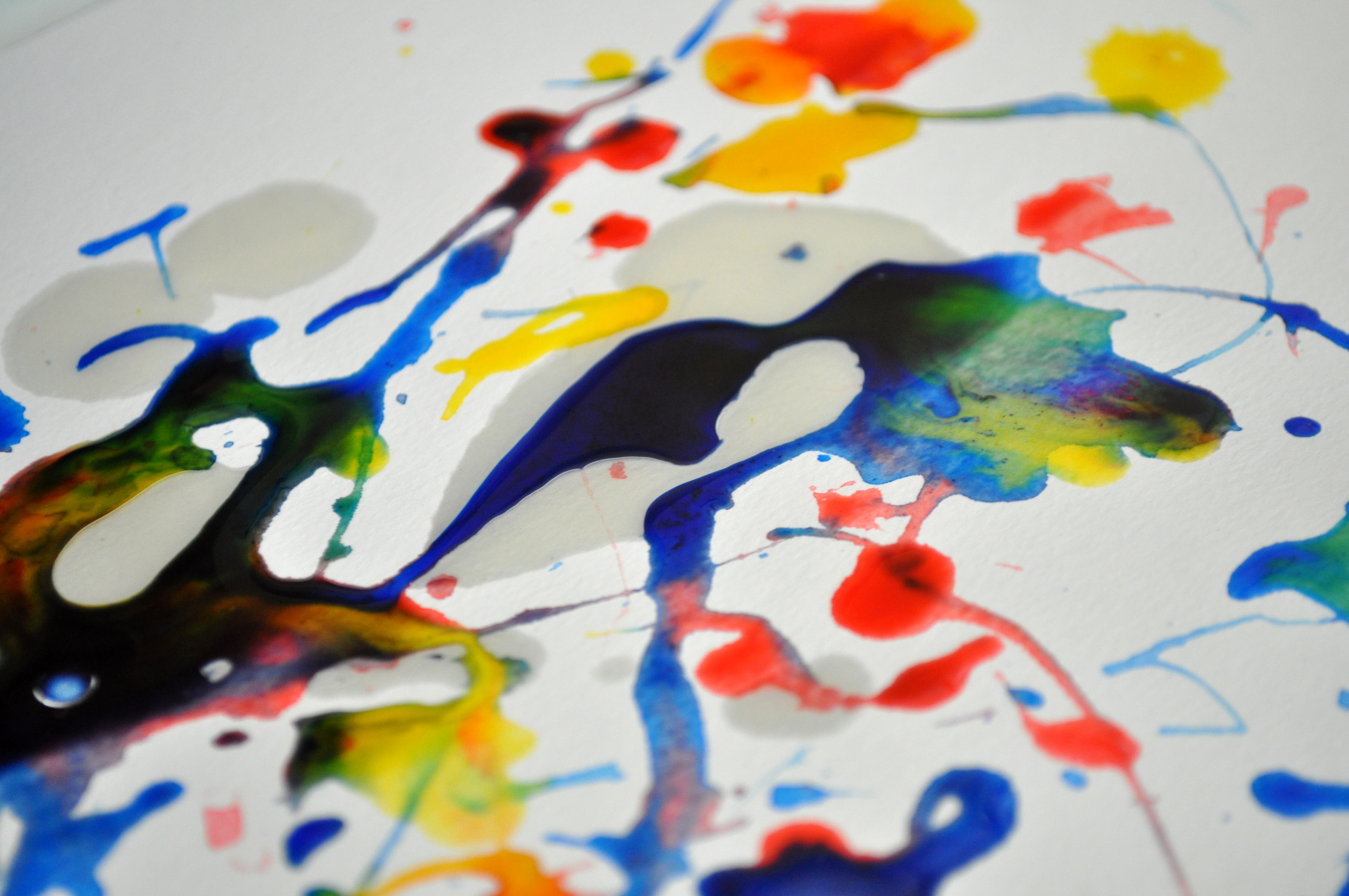
Hey! We just realized we’ve shared 100 posts since we started this blog last June. To celebrate, I’d like to share some a small percentage of the many beautiful things made in the Studio since then . These images represent ideas, problems solved and not-yet-solved, imagination, experimentation, conversations shared, and yet more work which wasn’t kept by the creator but was still worthy of creation nonetheless. For those of you who have started or are about to start a new school year next week, I hope these images help you begin the year on a happy note. Enjoy the weekend and here’s to the next 100 posts!
Making Art with Children
Archive for August, 2012
One Hundred (and One!) Posts!
Friday, August 31st, 2012Carleville – Where Trash is Treasured
Sunday, August 19th, 2012Under Construction
Wednesday, August 15th, 2012Yesterday we started the new Public Art Project, Create a Cityscape in The Studio! Take a look below at what guests are making.
This project is inspired by the busy urban neighborhoods in the illustrations by Ezra Jack Keats, currently on view in the exhibition appropriately titled The Snowy Day and Ezra Jack Keats.
We gathered up egg cartons, colorful file folders, chipboard, paper towel tubes, paper cups, chopsticks, coffee stirrers, wine corks, paper bags, junk mail envelopes, packing peanuts and more, to work with for this project. I ordered our supplies through The Web Restaurant Store or they are donations from Museum friends and staff.
Found paper and fabric materials provide a great variety of scale and favorable drawing surfaces, so details can be added to buildings and their surroundings easily with markers or crayons. Read my post about helping children with found materials construction techniques, here.
This past spring we made Very Hungry Caterpillars with found materials to celebrate annual Very Hungry Caterpillar Day. View the fabulous photos here.
Speaking of celebrations, The Eric Carle Museum’s Tenth Anniversary is just around the corner and we have some fun plans in the works to involve fans from around the world in our year-long celebration here at The Museum. (Vague enough for you!?) Here’s a hint: The project will feature our favorite Caterpillar and LOTS of found materials. . .Stay tuned for more information about how your family, classroom or community can participate!
Helping Children Problem Solve: Tissue Paper Collage Edition
Saturday, August 11th, 2012As we wrap up a fun month of tissue paper collage in the studio, I’m reminded of an experience I had with J and B (brothers), couple of young guests, when we did tissue collages last November.
The materials on the tables were: colored tissue papers, oil pastels, liquid starch, glue brushes, and scissors. Each guest also received two different size pieces of watercolor paper. Maybe you remember my post On Limitations explaining why we offer only certain materials or limit quantities for a given project?
I think it was B who first requested some tape. I asked him, “what is it you’re trying to do?” Whenever someone in the studio asks for a material that’s not being offered this is my reply. I’ve found that it’s a great way to find out whether they need my help in solving a problem or if they need a material for another purpose, like a temporary eyeglasses fix.
As we looked at his work, B explained that he wanted to put his tissue paper collage of a baby bird breaking through its shell on top of a larger piece of paper that he filled in with oil pastel.
I could easily have provided tape, but instead asked B, “Do you think there is anything here on the table you can use to connect your pictures?” Sometimes, just getting a child to re-notice what’s in front of him sparks the idea he needs to continue.
Sometimes he needs more questioning to help him see potential solutions. We talked about why tape works to connect things (it’s sticky) and I asked him if any of the materials on the table were sticky. We talked about how the liquid starch glue is sticky, but also thin, so maybe not strong enough to hold two thick papers together on its own. I also pointed out that tape is basically just sticky paper.
Now, I can’t remember if he figured it out on his own, or I wondered aloud, “could we use the tissue paper and starch to make our own tape?,” but it was something B was willing to try. He was excited to have worked out an aesthetically pleasing solution for his picture.
Later, when his brother J wanted to try it too, I asked B to explain to his brother how to use tissue paper like tape. Whenever possible, I try to get children to help each other problem solve. There’s another level of learning added to an art-making experience when the creator verbally shares the process or idea.
Sometimes, children come up with artistic solutions and test them only to discover they don’t work. Those are great moments of learning too! In those moments its important that I’m there to make non-judgmental observations encourage them to risk another solution. In those moments I learn too. That’s what making art with children is all about!
Fun Facts
Monday, August 6th, 2012We’re busy making Tissue Paper Collages in the Art Studio again! This is probably the most popular project we do all year. Below are a couple fun facts about the materials we use during a typical Summer Public Art Project.
· Museum guests create over 3,000 tissue paper collages in the Art Studio during the 6-week program.
· We go through nearly 9 gallons of liquid starch glue for making collages (the average collage requires less than 1-ounce to stick together!).
· If we lined all of the collages up side by side, they would stretch for 2/3 of a mile!
For more information about making a tissue paper collage at home or in the classroom, visit our Activities web page and click on “Tissue Paper Collage,” “Watercolor Tissue Papers” or “Homemade Liquid Starch Glue.”
Here are a few of our blog posts about tissue paper collaging:
Intergenerational Collage Activity
Watercolor Wash Collage Papers
This project ends on August 13th, so be sure to stop by before then to make your own!
Workshop for Advanced Illustrators
Sunday, August 5th, 2012In college I studied illustration and graduated thinking I would write and illustrate picture books and then eventually steer a course toward education. So far, it’s turned out that I took a big dive into education and then figured out how to swim. Maybe someday I’ll circle back around to making books, in the meantime I get to figure out how to use great picture book art in teaching. Someday if I step back into the book-making world I’m going to need a refresher. And this leads me to the ultimate purpose of this share…
Remember when I told you about some educators’ workshops I did for the Highlights Foundation at their fantastic barn back in May? This coming Labor Day weekend they’re hosting an Advanced Illustrators Workshop featuring amazing faculty: Eric Rohmann, Floyd Cooper, Kelly Ann Murphy, and Ruth Sanderson with other special guests.
I’m secretly wishing I could go – my experience at The Barn was so amazing, I know that I would leave both refreshed and fired up with new skills and ideas.
If you’ve heard about this workshop and are on the fence about signing up, get off! Do it!
If you’re friends with a children’s illustrator, encourage them to investigate! Send them this link!
See more pictures from the Advanced Illustrators workshop here.
Institute for Educators 2012 – Part 2
Saturday, August 4th, 2012
A few weeks ago Diana told you about a bookmaking workshop she facilitated as part of an institute The Carle co-hosted with Smith college, and yesterday I promised that I’d go into more detail about my Thread & Paper workshop with you today.
I’m a sewer, so the idea of combining thread and paper is exciting to me and I wanted to see what other artists have done. A quick search on Pinterest uncovered many interesting examples, and I made a board called Paper, Needle, Thread to organize the images.
I wanted to limit the types of papers available. After a few experiments by me and a couple of studio volunteers, I decided on white tissue paper, white card stock, cardboard, and embroidery floss.
Participants were first invited into free-association small-group conversations about paper and thread. Then, I made my Pinterest board images available to each of the small groups via printouts and a couple of borrowed iPads.
Next, they explored the properties of the embroidery floss and the 3 kinds of paper. To do this, they first manipulated one kind of paper with their just hands. Then, they played with ways to combine that paper with the floss. I also made embroidery and tapestry needles available.
After the participants gained some familiarity with the materials, they were invited to create a composition that combined two kinds of paper with the floss.
At the end of our creation time we discussed what we had done. I asked if seeing the images of artists’ work was helpful or inspiring to them. Some commented that it was intimidating to see ideas prior to playing with their materials, others thought the opposite – that the images excited them about getting to work with materials. The conversation then turned to our work with young children and whether or not we should show our students examples of artist’s work in connection with materials explorations.
Some interesting thoughts were shared, and I’ll share the studio’s approach to this another time. I’d love to know about your class or home. Do you show examples of artists’ work to children before a specific materials exploration, or not? If so, in which circumstances? Please share!
Institute for Educators 2012 – Part 1
Friday, August 3rd, 2012On July 14-16, The Carle, in collaboration with Smith College, hosted an institute for educators. Learning through the Arts and Literature: A Collaboration Celebrating Innovation and Inspiration in International Education featured presenters from Pistoia, Italy, the University of Florence, and local educators.
On the third day of the institute, attendees heard from Lella Gandini and Cathy Topal about materials as provocation and inspiration. Reflecting on the roles of teachers and children as researchers, their presentation shared images of children exploring paper napkins from the book Children, Art, and Artists (Reggio Children) and words from Vea Vecchi. Setting the tone for the 3 concurrent studio sessions (paper was the theme) directly following, Kathy said this about exploring materials:
“Its not about making something, but about how it looks here, how it looks there. (Working with materials is about) the pleasure of moving things around.” With that we all split off into various spaces of the Museum.
Cathy Topal facilitated a session around exploring the possibilities of white copy paper then engineering it into a bridge spanning 18″.
Colleagues from Pistoia invited their session attendees to fashion imaginative garments and accessories from many different kinds of paper.
and I facilitated an exploration called Thread & Paper. Check back tomorrow to see what happened in my session!