Posts Tagged ‘color wheel’

Monotype Printmaking with Kids

Monday, September 24th, 2012

I wanted to share this monotype printmaking project I taught last month during Animals, Art and Imagination, a mixed-age summer class we host here at The Carle every summer.   Monotype means one-of-a-kind and if you’ve ever tried this style of printmaking before, then you know how playful and open-ended a medium it can be for making marks and layering colors.  It’s  a great project to try whether you’re doing a lesson on the color wheel or just looking for a rainy afternoon activity at home with your family.

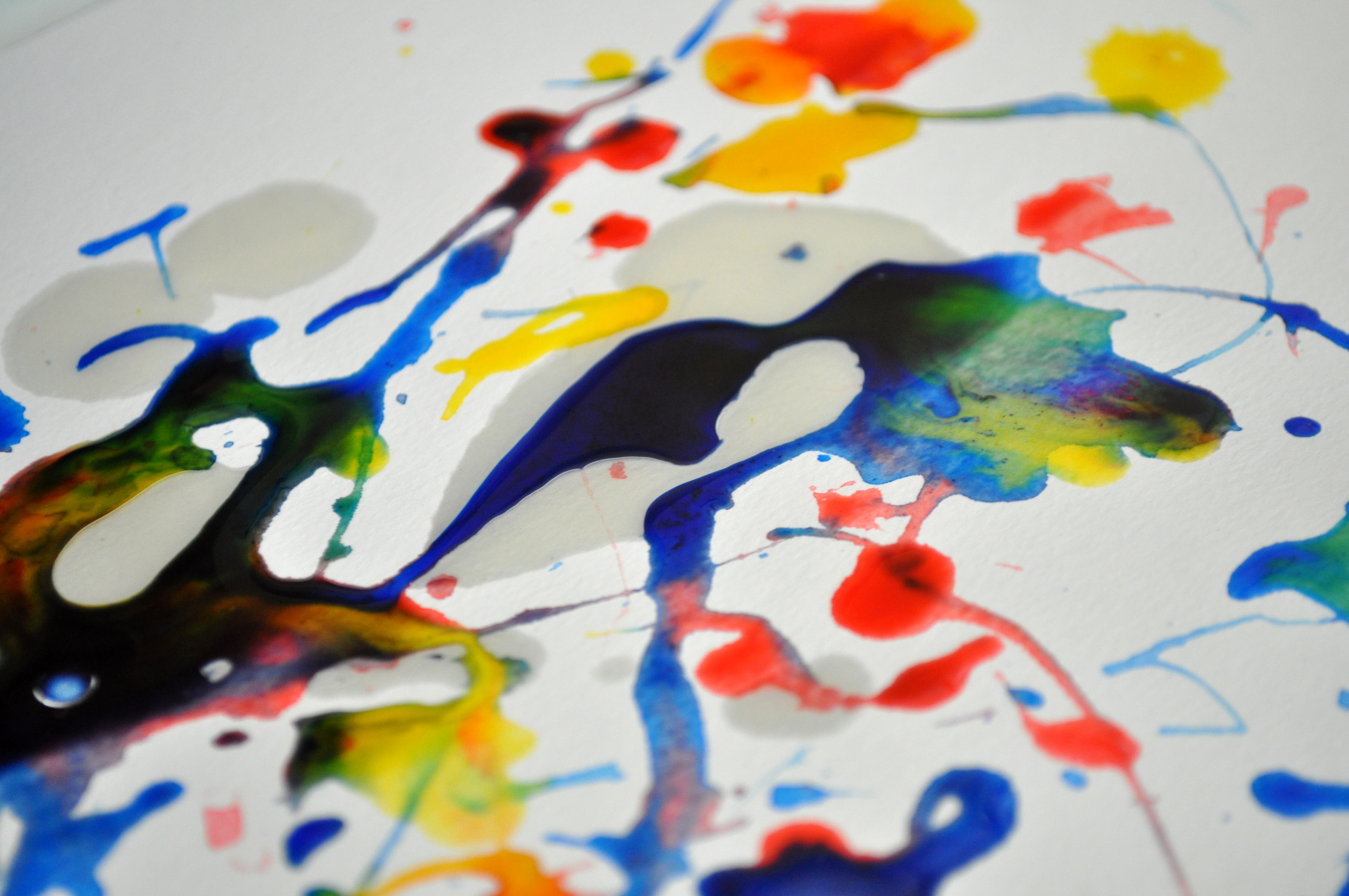
In this exercise we rolled  ink  on plexiglass plates in the primary colors (blue, yellow and red).  When we printed the single-color plates on top of each other, a magical thing happened. In the places where those colors overlapped on the paper, the secondary colors (green, orange and purple) suddenly appeared.  Okay, it’s not exactly magic,  but printmaking always has a super surprise factor, you never know quite how things will turn out, and to kids especially, that’s pretty magical!

Let me backtrack to earlier in the day, prior to the printmaking lesson.  As a mark-making warm-up, Meghan introduced the students (ages 6-10) to The Museum’s sculpture Imaginary Garden by Leo Lionni, which lives in the Great Hall, encased in glass. 

They had a discussion about what they saw going on in the large landscape, and then sketched the parts of the sculpture that interested them the most on small clipboards.

When the group returned to the Studio, I gathered them around and gave an introduction to the color wheel and how the primary colors mix together to make the secondary colors.  I also demonstrated how to use the materials and tools found at each station around the room.

I assigned a random color order to each child to help everyone move from station to station to make an even flow around the room without crowding.  When they got to their first station, everyone rolled the ink onto the plates in their first color, red, yellow or blue.

Next, they used one of the cotton swabs to make marks and remove areas of the ink.  I asked them to think of things growing in nature for inspiration.  A variety of tools can be used to remove the ink from the plate: combs, forks, found materials or basically anything pointy.  I kept it simple and provided cotton swabs for this activity.

After mark-making they carried their inky plate over to the printing press station where I helped them run their plate and a piece of paper through our tabletop press.  I made sure the pressure was set and handled the press blankets so they didn’t get covered in finger prints and they were in charge cranking the handle.

The last step was to return their plexiglass plate to a tray to be reused, and write their name on their print and leave it to dry.  One of the best things about this process is how quickly the work dries on a table or rack.

They repeated the whole cycle until they had overlapped all three colors on one piece of paper.

I asked them to make at least three complete prints during the 45-minutes we had for this project.  We easily could have continued for an hour (or more!) since the different steps kept the kids really engaged.  Everyone had a handful of colorful prints to take home at the end of the day.

Here is the list of materials I used for this project:

  • Tabletop Printing Press, The Studio has this one.  Hand printing works fine if you don’t have access to a press
  • 3mm plexiglass cut down to about 7″ x 5.5″ with rounded corners (we have a set of about 30 little plates, but you could get away with 15 or 20)
  • Akua Kolor Slow Drying Watercolor in Crimson Red, Phthalo Blue and Hansa Yellow (you can use tempera paints instead if that’s what you have)
  • Speedball Screen Printing Transparent Base 32 oz. or gallon (use Nasco Tempera Extender instead if you’re using tempera paints)
  • 4″ foam brayers- at least 6, I prefer using the foam rollers over the rubber rollers for this activity
  • small trays for rolling out the ink at each station (I suggest 2 rolling trays per station)
  • 3 plastic deli containers with lids
  • 3 plastic spoons
  • a stack of drawing paper cut down to a little larger than the plate

To mix the colors for printing, put a few scoops of the transparent base (big scoops if you’re mixing for a large class) in a deli container and stir in several drops of the Akua Kolor until you get the level of transparency you like.  Repeat the process for the other two colors. You want plenty of transparent base so the colors will blend when overlapped, but you don’t want to add so much that your colors aren’t vibrant if you print them alone.  Test out what you’ve mixed by brushing it onto a piece of paper. The colors can be mixed ahead of time and stored in the deli container for several days in a cool, dark place.  For rolling, spread a spoonful of the ink mix across the top of the tray and use the roller to spread the ink evenly in the tray.  I suggest keeping adults in charge of adding more ink to the trays, kids tend to add more than they need and the roller can get too gloppy.

Click here to see our other printmaking ideas.

One of my favorites (besides monotypes) is making pasta machine prints.

Have a great week!


Photo Credit Laurie Mills


A Green Thumb

Monday, April 16th, 2012

During our preparation this week for the next Public Art Project,  I was reminded of how much we love using magazine paper for programs here at The Carle.  From time to time we’ll acquire a stack of cooking or home magazines from someone’s attempts to clear out their clutter.  We cut out interesting patterns or textures and organize them in baskets by color (plus one basket just for fun, crazy patterns!) and set them aside until we might need them.

We’ll be using magazine papers (as well as other types of paper) for the upcoming project The Shape Game, which starts this Wednesday the 18th.  I took a moment to play around with the clippings when I was photographing the baskets, and very quickly made a color wheel.

The magazine papers are so much fun to arrange and sort!  It’s just another great way to explore color, pattern and visual texture with children.

By coincidence, one of our regular visitors (and mom of three) Sara G. brought by a whimsical tree she recently made with magazine clippings and other materials she had at home.  This is a great example of a project you could work on as a family or a class to really customize to the style.  Bright colored papers and drawing tools make a ‘loud’ tree,  or just pencil drawings on neutral colored papers make a ‘quiet’ tree.  Or  go all out and make a color wheel tree!

Sara collaged both sides of every leaf on the tree with a mix of patterns and colors.  The leaves are ‘laminated’ between pieces of packing tape and attached to the branches with floral wire.  They still have a lot of movement and when I was photographing the tree in our orchard, the leaves were flapping in the breeze just like the real thing.  The branch is attached to a block of wood, which she collaged with paper and brown beads (to represent the roots).

I even love the surprise birds’ nest she tucked into one of the branches!

For another color wheel project Meghan made click  here, or search keyword “color” in our search bar.

Do you save magazine clippings for collage at your home or in your classroom? what’s your sorting system?

Thanks for sharing your project with us Sara!


Window Color Wheel

Wednesday, September 28th, 2011

color wheel- water and food coloringNear the end of our painting project in the studio I realized that we didn’t have a color wheel up  so I had some of our studio staff help me make this color wheel out of water, plastic bags, fishing line and a tension rod.

color wheel water bags

We have one of the standard art room posters with circles of color and lines connecting the primaries and secondaries. Effective as it is at helping explain how color works,  I’m bored of that poster and wanted something new.

mixing  colors for the color wheel

One of our volunteers used food coloring to mix the color wheel in cups of water then transfer the water to small zip-top bags we picked up from either Michael’s craft store or from an online shop like Bags & Bows.

colored water in bags

Our work study student Lydia reinforced the top of the bags with heavy duty clear packing tape  and then poked a hole in the space above the bag’s seal to tie fishing line through.  Then she taped a paper circle to the window to use as a guide for tying each bag to the tension curtain rod fitted in the window. She left plenty of extra line on each bag so that she could make adjustments and trim the excess when she was happy with their placement.

water color wheel

Have you or your students ever made a creative color wheel? I’d love to see pictures and maybe share them here! Send your pics to me at artstudio@carlemuseum.org